

Full course description

Estimated Hours to Complete: 3.5
The Dementia Specialist program provides training and support for direct care and supportive healthcare professionals. Delivered through asynchronous modules, the eight-module curriculum builds knowledge, skills, and confidence while supporting career advancement across three levels of specialization.
Before enrolling in this microcredential assessment course, learners must first complete Courses 1–3 through the Dementia Specialist Course page. Please visit the Dementia Specialist Course page [insert link] to access and complete the required coursework. After completing the first three courses and earning the associated certificates, learners will return to this Canvas course to submit their certificates and access the final assessment for Microcredential 1.
This Canvas course serves as the assessment component for Microcredential 1: Dementia Informed. Two additional microcredential assessment courses will follow before learners earn the final Dementia Specialist badge.
On average, it takes between 1-3 hours to complete the coursework, and an additional .5 hour to complete the assessment.
Learning Objectives
- Describe the most common types of dementia, including Alzheimer’s Disease, Vascular Dementia, Lewy Body Dementia, Frontotemporal Dementia, Mixed Dementia, and Mild Cognitive Impairment.
- Explain the different symptoms and characteristics of each defined dementia.
- Identify best practices in care to help manage symptoms of dementia.
- Identify common cognitive changes through the early, middle, & late stages of Alzheimer's Disease and Related Dementia (ADRD) and explain how these changes affect an individual’s abilities.
- Discuss the anticipated needs of individuals in early, middle, and late-stage dementia.
- Review best practices for person-centered care in each stage of dementia.
- Explain the theory of retro-genesis, the reversal of brain development, and its relationship to the stages of dementia, and how to apply this theory to support independence and enhance quality of life through person-centered care.
- Explain how team-based, person-centered care supports people with dementia across different care settings.
- Identify the types of assessments and supports used to understand a person’s thinking, daily function, emotions, and environment.
- Use communication strategies that help you work well with others across different healthcare roles and settings.
How to Earn this Microcredential
 |
A microcredential recognizes your successful completion of a structured learning experience designed to build and validate specific teaching and learning competencies. Microcredentials go beyond course participation; they certify that you have demonstrated defined skills aligned to institutional standards and professional practice. When you earn a microcredential, you also receive a digital badge, which serves as the official, portable record of that achievement. Your digital badge is the verified representation of your microcredential. It is an online credential that contains embedded metadata—secure, verifiable information that documents:
This means your microcredential is not just a line on a transcript—it is transparent, verifiable, and shareable proof of your learning. Preview the pathway for the completed microcredential in order to review the microcredential's requirements. |
Course Faculty
 |
Jaime Cobb Tinsley Jaime is a Certified Community Health Worker and Certified Montessori Dementia Care Professional, serves as the Vice President of Family & Professional Education at the James L. West Center for Dementia Care. She earned her degree in Integrated Marketing Communication from Abilene Christian University and has dedicated more than 18 years to supporting individuals living with dementia and those who care for them. Jaime is passionate about helping care partners gain confidence, competence, and meaningful connection in their caregiving roles. Through her work, she equips both family and professional caregivers with practical strategies, education, and encouragement that enhance relationships and improve quality of life for people living with Alzheimer’s disease and related dementias. During her tenure at the West Center, Jaime has developed and implemented a variety of innovative education and support programs designed to empower caregivers and strengthen dementia care practices in the community. Jaime is a Certified Alzheimer’s Educator, Independent Positive Approach to Care™ Trainer, and a Master Trainer for the Stress-Busting Program for Family Caregivers™. She is a sought-after speaker and educator known for translating complex dementia care concepts into practical, compassionate approaches that build confidence and connection in caregiving relationships. |
 |
Hollie Lowe Hollie Lowe is a Licensed Professional Counselor, who currently works for the James L. West Center for Dementia Care in Fort Worth. She is the Director of Education and Family Support Services. She facilitates the center's family support groups and is involved in many of the numerous education services provided by the center. Hollie is a Dementia Care Expert and Certified Grief Counseling Specialist. She has over thirty years of experience in education and working with people of all ages. She has degrees from Southwestern Oklahoma State University, Sam Houston State University, and Dallas Baptist University. She also attended Southwestern Theological Seminary to obtain hours in theology. Hollie has been recognized as a national and statewide speaker on topics such as Dementia, Hospice, and Professional and Caregiver Stress. One of the highlights of her career includes getting to meet and speak before First Lady Rosalynn Carter and Senator Elizabeth Dole. She has also written a therapy to be used with patients at the end of life, that focuses on the individual needs of the person and their family. Her passion is educating the public and helping families who have a loved one diagnosed with dementia. |
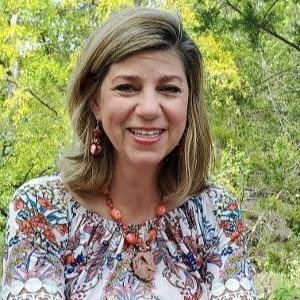 |
Tia Viera Tia Viera is the Director of Bilingual Education at the James L. West Center for Dementia Care, where she is devoted to empowering caregivers, especially those within Hispanic and Latino communities, to better understand, navigate, and manage the challenges of dementia. Drawing on extensive experience in dementia care and community education, Tia has served in key roles with the Alzheimer’s Association North Central Texas Chapter and Dementia Friendly Fort Worth. Her professional expertise is deeply rooted in personal experience: for more than 16 years, she provided support for her mother, gaining profound insight into dementia’s progression and the communication skills essential for supporting individuals and families through each stage of the disease.
Tia’s commitment to serving Hispanic and Latino families is further shaped by her years living in Central America and Puerto Rico, where she witnessed firsthand the importance of culturally relevant education and trusted information. Through the Cerebro Sano program, she now delivers bilingual brain health and dementia education designed to bridge healthcare gaps, strengthen intergenerational understanding, and make vital information accessible in both English and Spanish. |